Shower Pan Waterproofing for Commercial Projects: How to Choose a Leak-Proof Shower Base Solution
In commercial bathroom projects, shower pan waterproofing is not just an installation detail. It is a risk-control factor that affects building performance, maintenance cost, project delivery, and end-user satisfaction. For hotels, apartments, student housing, senior living facilities, and large residential developments, a leaking shower area can create far more than a simple repair issue.
A single waterproofing failure may lead to ceiling damage, mold complaints, guest dissatisfaction, delayed handover, and repeated after-sales claims. When the same shower design is used across hundreds of rooms, the cost of poor waterproofing can multiply quickly. This is why more and more people increasingly look beyond price and focus on the structure, material, drainage design, and manufacturing reliability of a waterproof shower pan.
For contractors, developers, wholesalers, and bathroom brands, choosing a reliable waterproof shower pan manufacturer is an important step in building a safer and more efficient commercial bathroom system.
What Does Shower Pan Waterproofing Mean?
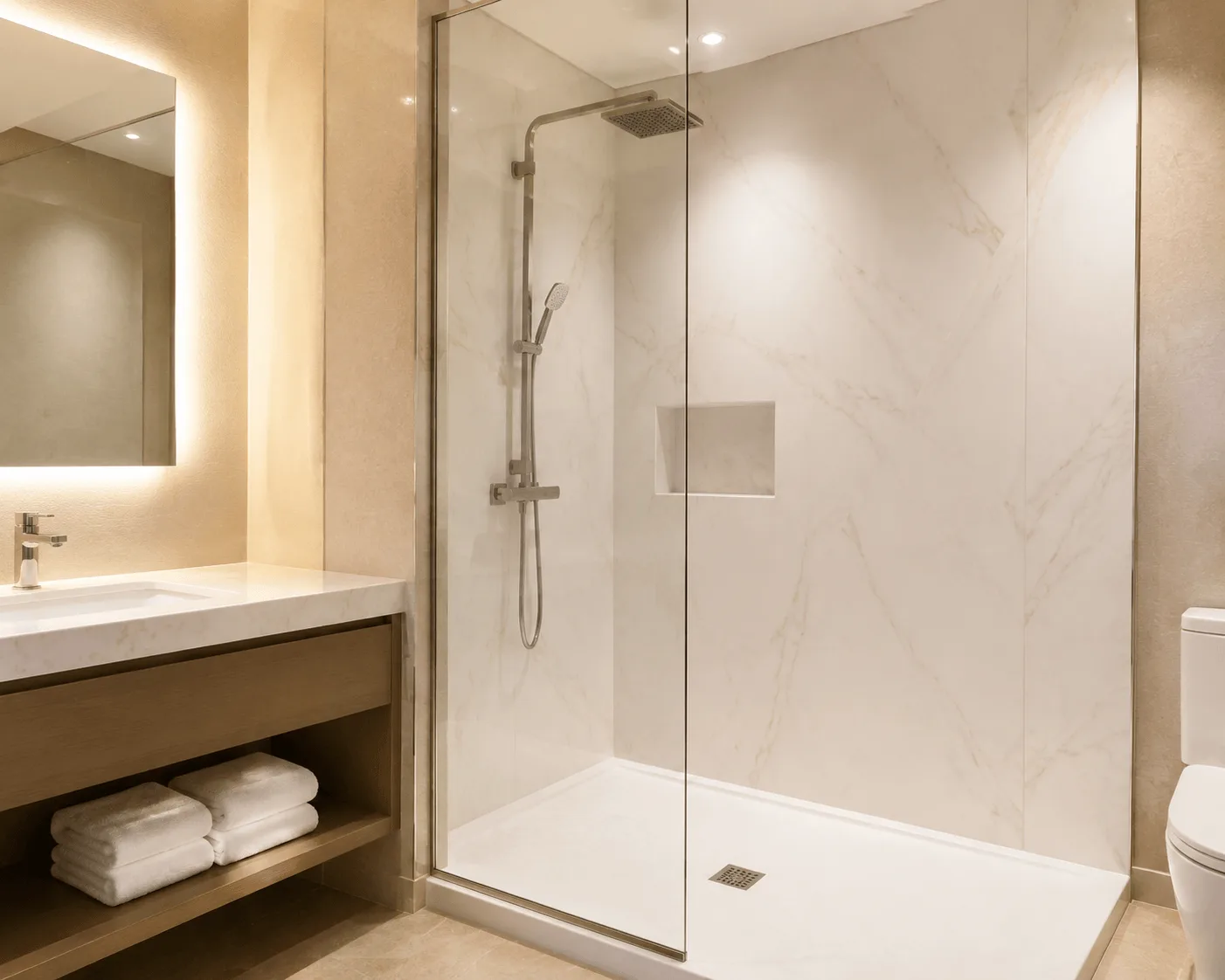
Shower pan waterproofing refers to the method used to stop water from passing through the shower floor into the building structure below. In a typical shower area, water must flow from the surface to the drain without collecting around corners, edges, or joints.
In commercial projects, waterproofing may be achieved through different solutions, including site-applied membranes, tile-ready systems, liquid waterproofing layers, or prefabricated shower bases. Each system can work when designed and installed correctly. However, the level of consistency is not always the same.
The key question is not only how to waterproof a shower pan. The more practical question is how to choose a shower base solution that reduces leakage risk, improves installation efficiency, and performs consistently across multiple rooms.
Why Commercial Projects Need Better Waterproofing Control
Commercial bathrooms face higher usage frequency than ordinary residential bathrooms. Hotel bathrooms are cleaned daily. Apartment bathrooms must remain functional for long-term tenants. Student housing and senior living facilities require durable, low-maintenance wet areas.
Poor shower pan waterproofing can result in hidden water damage. Once water penetrates below the bathroom floor, it may affect the subfloor, walls, ceiling, or neighboring units. In multi-floor buildings, one failed shower area can create damage in the room below.
For project owners, the real cost is often not the replacement of the shower pan itself. The larger cost may include labor, room downtime, tenant complaints, repainting, ceiling repair, and damage to brand reputation.
This is why a stable waterproof shower base for hotel projects should be evaluated as part of the total project cost, not only as a product purchase.
Common Causes of Shower Pan Waterproofing Failure
Several factors can lead to waterproofing problems in commercial shower areas.
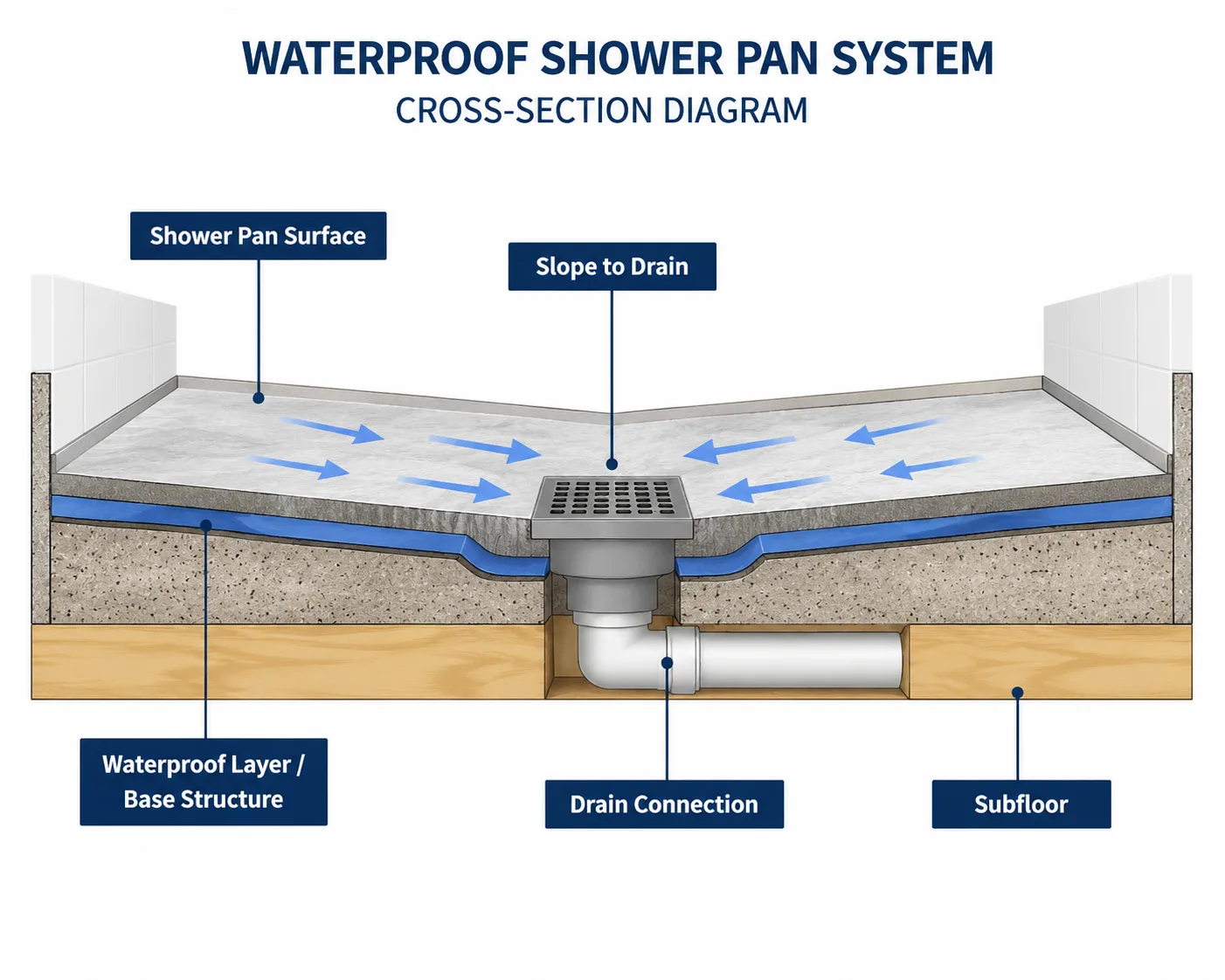
The first is poor slope design. A shower floor must guide water toward the drain. If the slope is too flat or uneven, water may stay on the surface. Standing water increases cleaning difficulty and may create stains, odor, or long-term moisture problems.
The second is weak drain connection. The drain area is one of the most sensitive points in any waterproofing shower pan system. Even if the base surface is strong, leakage may still occur if the drain opening, sealing area, or connection detail is not properly controlled.
The third is unstable material. A shower base that cracks, bends, or deforms during use can lose its waterproofing performance. Commercial bathrooms require materials that can handle repeated use, cleaning chemicals, weight pressure, and transportation stress.
The fourth is inconsistent on-site workmanship. Traditional waterproofing often depends heavily on installer skill. In large projects, different workers may produce different results. Prefabricated shower bases can reduce this uncertainty because the main waterproofing structure is formed under factory-controlled conditions.
Prefabricated Waterproof Shower Pan vs. Site-Built Waterproofing
A site-built shower floor usually requires slope preparation, membrane installation, drain treatment, tile laying, grouting, and curing. This method offers design flexibility, but it requires careful supervision and skilled labor.
A prefabricated waterproof shower pan is produced before it reaches the job site. Its shape, slope, drain position, and surface are already formed. For commercial projects with repeated bathroom layouts, this can improve consistency and reduce installation time.
A prefabricated solution may offer several advantages:
It reduces on-site waterproofing steps.
It helps keep bathroom dimensions consistent.
It lowers dependence on installer workmanship.
It supports faster installation schedules.
It can reduce long-term leakage risk when properly designed.
This is why many hotel and apartment projects consider factory-made shower bases instead of relying only on traditional tiled shower floors.
How to Evaluate a Waterproof Shower Pan Manufacturer
A reliable supplier should be reviewed from several angles, not only by product photos or quotation.
1. Material and Structural Stability
The material should support long-term waterproofing performance. Common options include acrylic, fiberglass-reinforced materials, solid surface, artificial stone, stone resin, and cultured marble.
For a waterproofing shower base, the buyer should check whether the material resists cracking, whether the surface is easy to clean, and whether the product maintains its shape during installation and use.
2. Drainage Design
Drainage performance is central to shower pan waterproofing. A good shower base should have a controlled slope, accurate drain opening, and suitable edge design. The drain position should also match project plumbing drawings.
For hotels and apartments, even small drainage errors can become large problems when repeated across many bathrooms.
3. Customization Ability
Commercial bathrooms often need custom sizes, special drain positions, matching colors, anti-slip surfaces, or private label packaging. A professional waterproof shower pan manufacturer should be able to support project-based customization instead of offering only standard retail sizes.
4. Batch Consistency
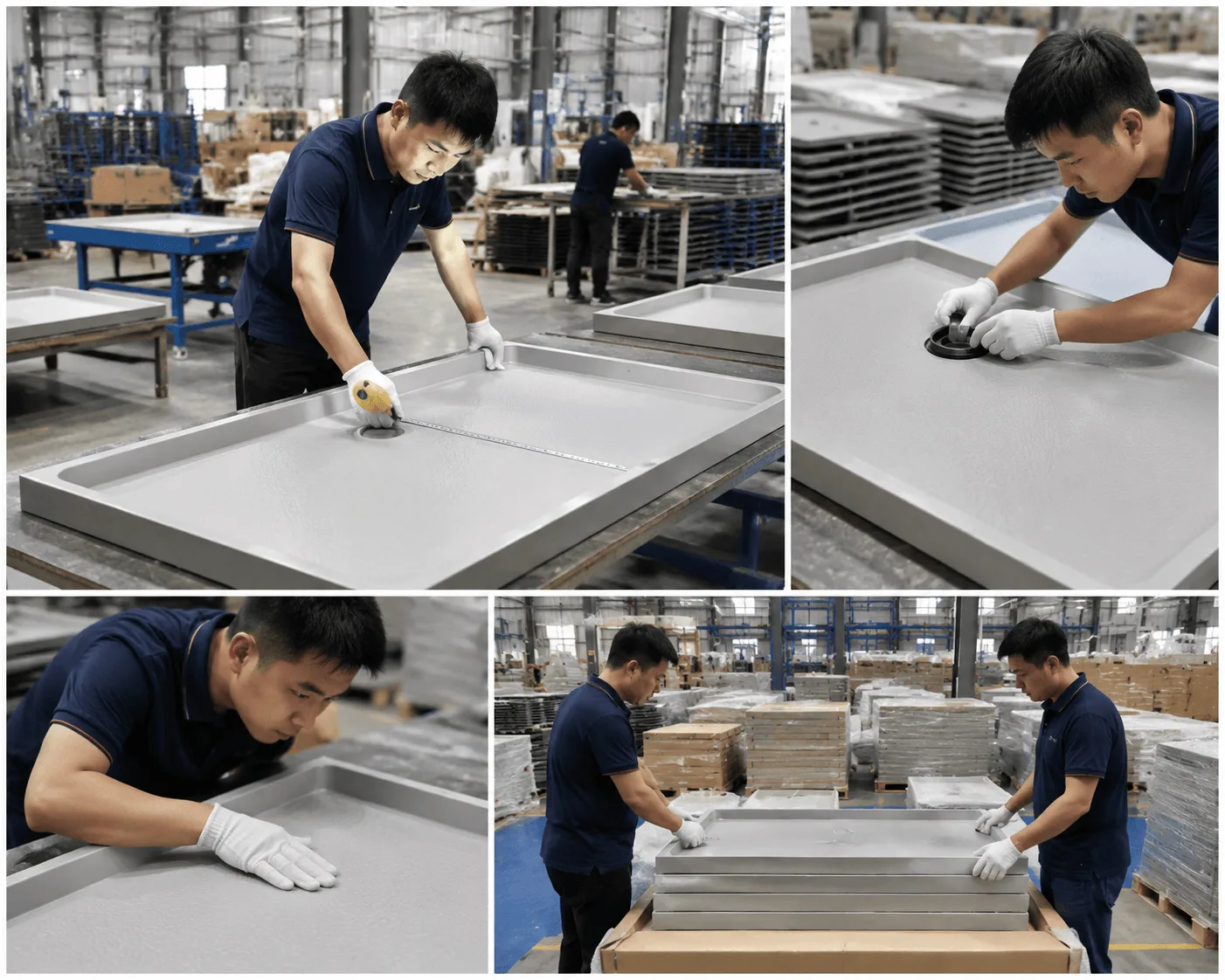
A sample can look acceptable, but commercial procurement depends on mass production stability. Buyers should ask how the factory controls dimensions, surface finish, packaging, and inspection during bulk production.
5. Project Experience
A supplier with hotel and apartment project experience is more likely to understand installation schedules, packing requirements, product consistency, and long-term supply needs.
Hondao positions itself as a manufacturer of cultured marble bathroom products tailored for hotels, apartments and large‑scale residential projects. It also offers product lines including shower bases and shower walls, which are well‑suited for commercial bathroom supply needs.
Requirements for a Waterproof Shower Base for Hotel Projects
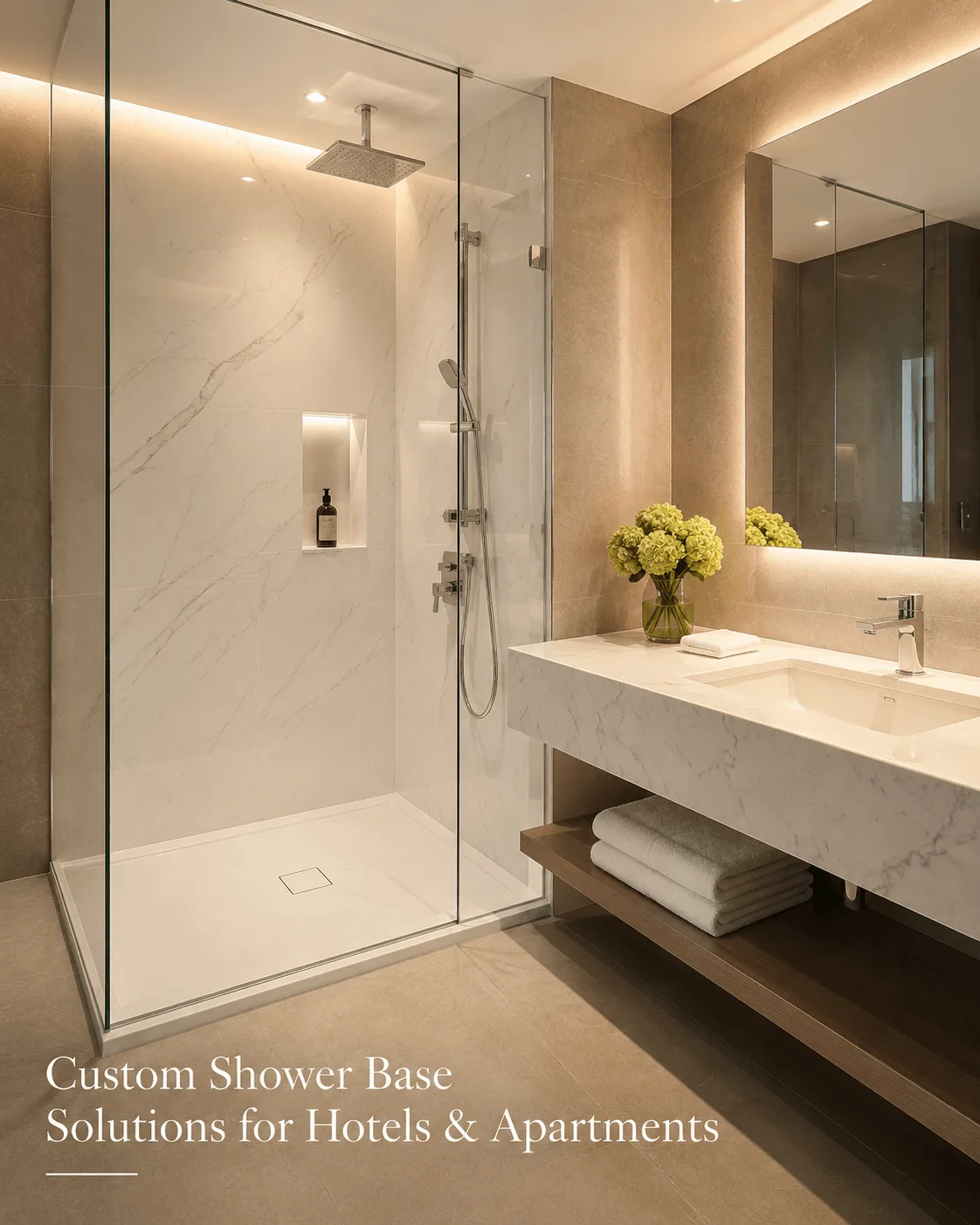
A waterproof shower base for hotel projects should balance durability, appearance, drainage, and maintenance efficiency. Hotel operators usually need bathroom products that look clean, install quickly, and perform reliably after frequent use.
The surface should be easy for housekeeping teams to clean. The structure should remain stable under daily use. The design should reduce water retention. The packaging should protect products during transportation. The dimensions should remain consistent from one room to another.
A reliable waterproof shower floor should also work as part of a larger bathroom system. It must connect properly with the drain, wall panels, flooring, and plumbing layout. When the shower base and wall system are considered together, the overall waterproofing result is usually easier to control.
Buyers Should Ask Before Ordering
Before confirming a supplier, you can ask several practical questions:
What material is used for the shower pan?
Can the size and drain position be customized?
Is the product suitable for hotel or apartment bathrooms?
How is the drain area controlled during production?
What packaging is used for export shipment?
Can the factory provide samples before bulk orders?
Does the supplier support OEM or private label projects?
Can matching shower wall panels be supplied?
What is the normal lead time for project orders?
How does the supplier handle quality issues?