5 Differences Between an Artificial Stone Shower Base and SMC for Hotel Projects
In modern commercial hospitality and high-end residential developments, the “foundation engineering” of the bathroom wet zone directly impacts the construction timeline and long-term maintenance costs. As the core component of the shower enclosure, selecting the right pan is critical. Currently, two primary composite materials dominate volume-procured commercial projects: the Artificial Stone Shower Base (frequently specified as cultured marble or solid surface pans) and SMC (Sheet Molding Compound) bases.
For General Contractors (GCs) and commercial procurement directors evaluating project submittals, making an informed choice requires looking past supplier marketing and analyzing the hard data behind material science, structural mechanics, and the Total Cost of Ownership (TCO).
📋 Technical Specification Overview
Material Composition: Homogeneous Cast Polymer vs. Compressed Fiberglass Sheet
Surface Aesthetics: Minimalist Premium Textures vs. Industrial Standard Patterns
Structural Mechanics: Zero-Deflection Rigidity vs. Micro-Flexing Risk
Job-Site Durability and On-Site Surface Renewable Repairability
Spatial Synergy and Lifecycle Cost Analysis (TIC vs. TCO)
1. Material Composition: Homogeneous Cast Polymer vs. Compressed Fiberglass
To perform an objective specification review, engineers must evaluate what occurs beneath the finished surface glaze of the fixture.
A premium Artificial Stone Shower Base is manufactured by casting a dense, homogeneous blend of natural mineral dust (such as marble crystals) and advanced polymer resins inside high-precision molds under vacuum conditions. This cross-sectional matrix ensures the product is completely solid throughout its entire thickness. It contains no internal air pockets, hollow cores, or layer separations.
Conversely, SMC (Sheet Molding Compound) is a fiberglass-reinforced polyester composite. It is produced by compressing chopped glass fiber strands between layers of liquid resin paste under intense heat within heavy hydraulic presses. To minimize weight while retaining minimal structural form, an SMC pan features a very thin wall profile backed by a network of molded structural ribs on its underside.
2. Surface Textures and Spatial Aesthetics (Visual Analysis)
Tactile and visual quality directly influences a hotel guest’s perception of room luxury. Examining real-world production samples reveals a stark contrast between these two options.
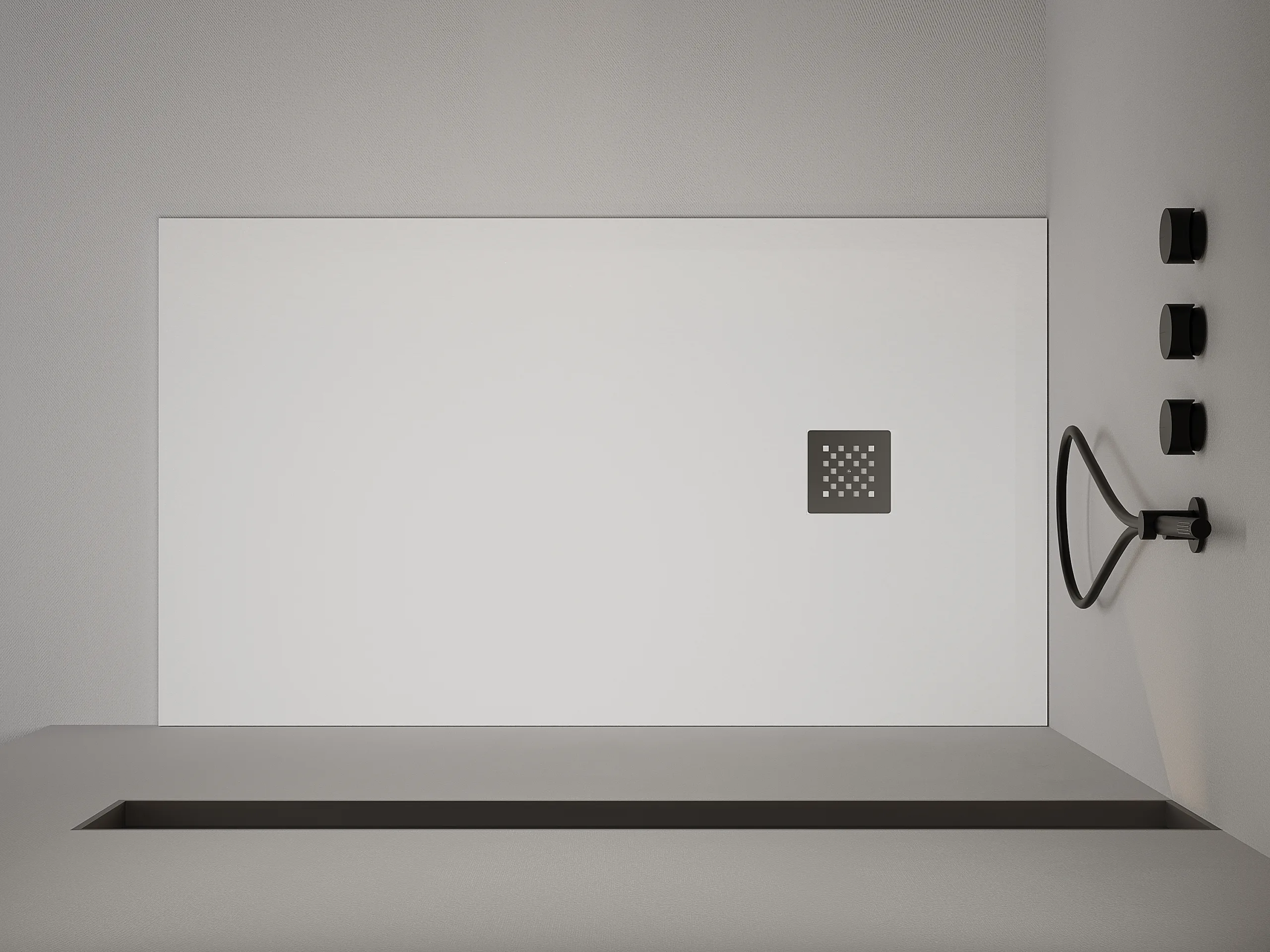
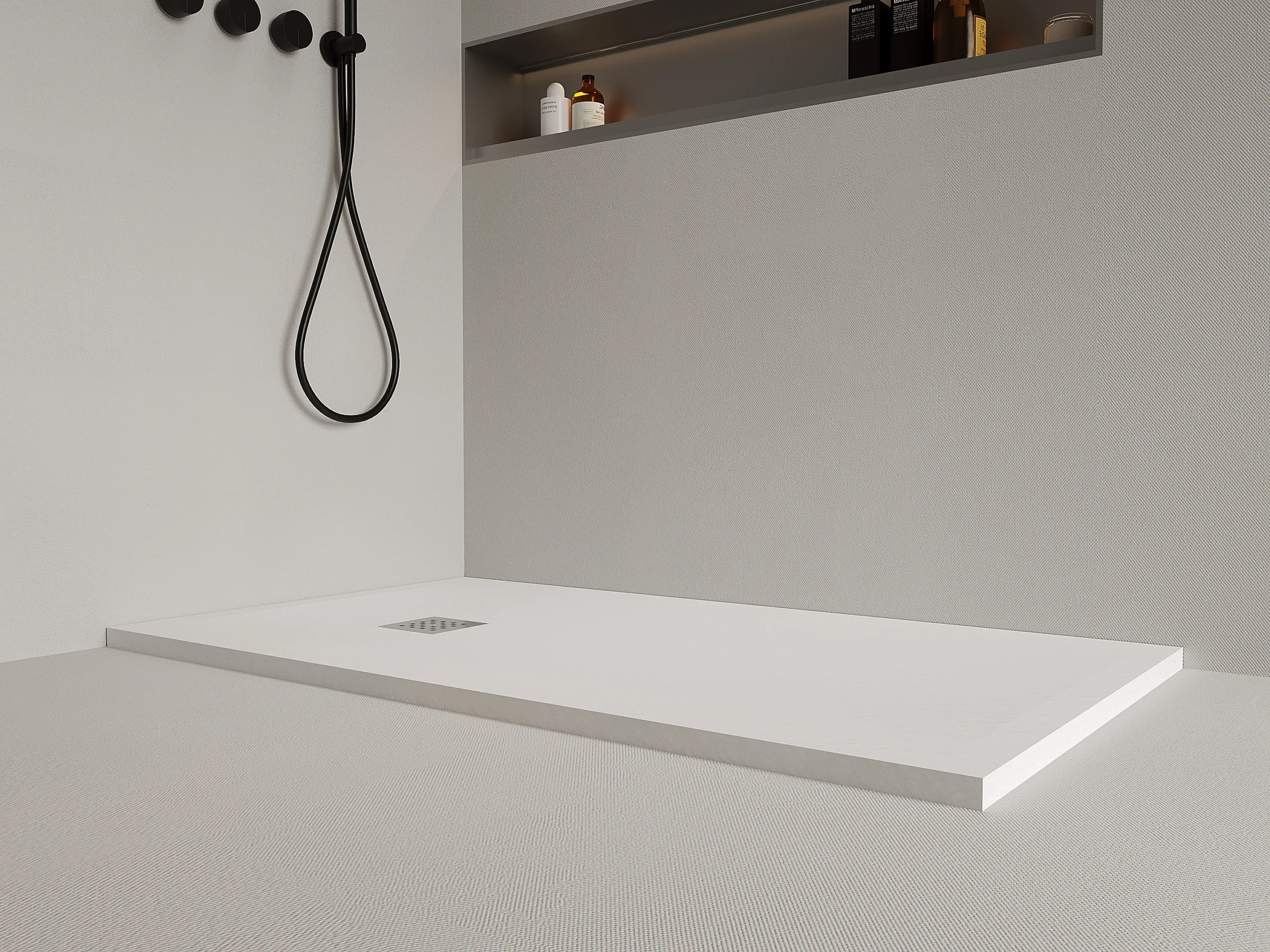
As demonstrated in modern high-end wet zone layouts, a premium Artificial Stone Shower Base features an architectural, silk-like matte texture. Its geometric lines are incredibly clean, notably utilizing a flush, hidden drain cover manufactured from the exact same material and color profile as the pan itself. This seamless integration allows the base to blend perfectly with surrounding wall surrounds, fulfilling the strict design criteria of modern luxury minimalism.
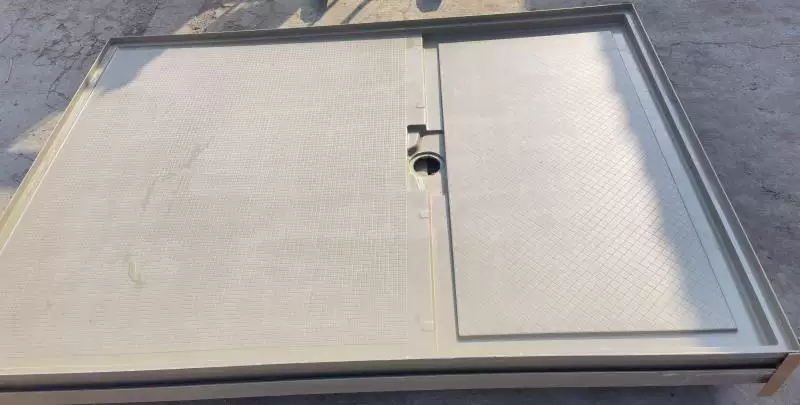
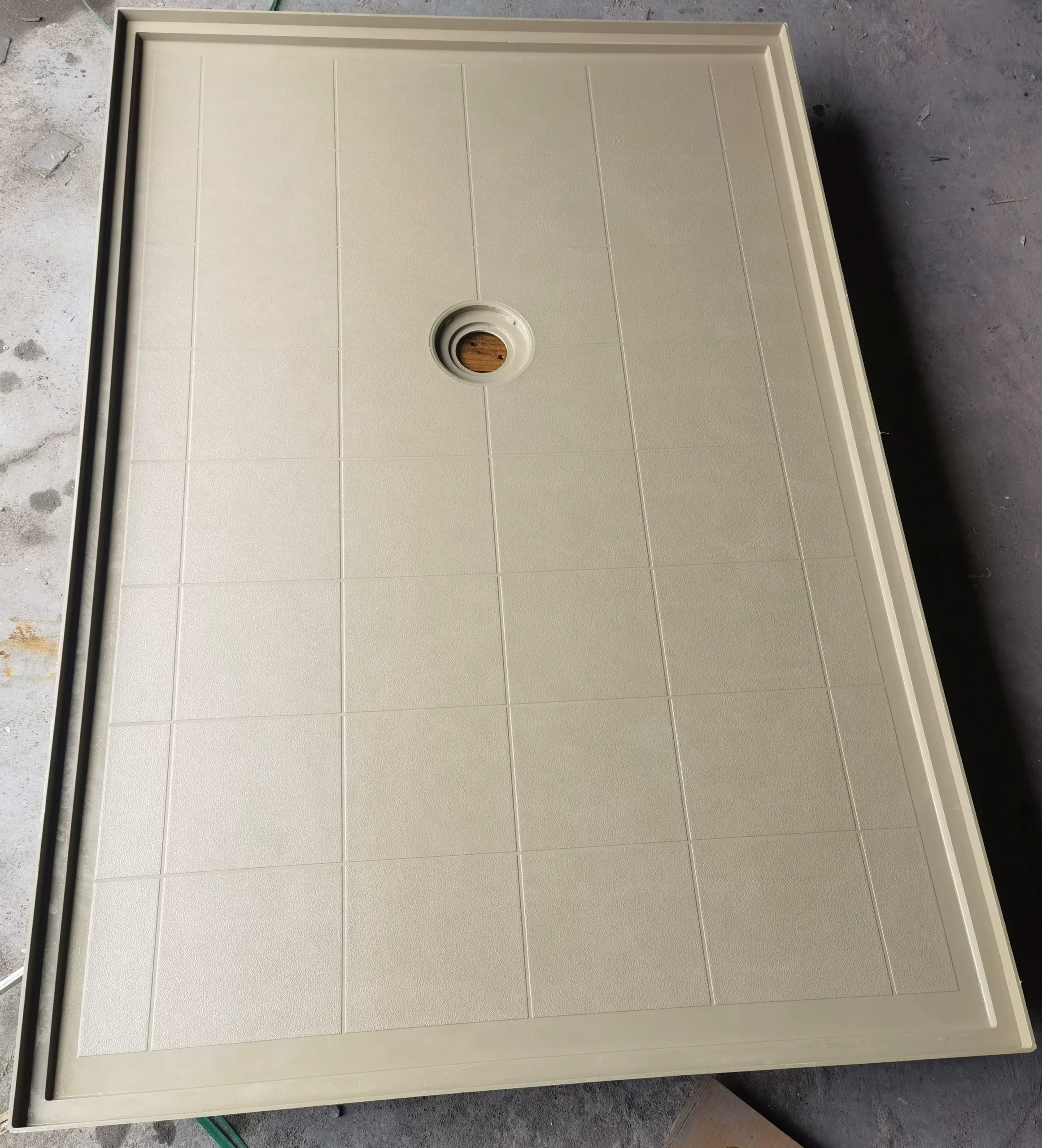
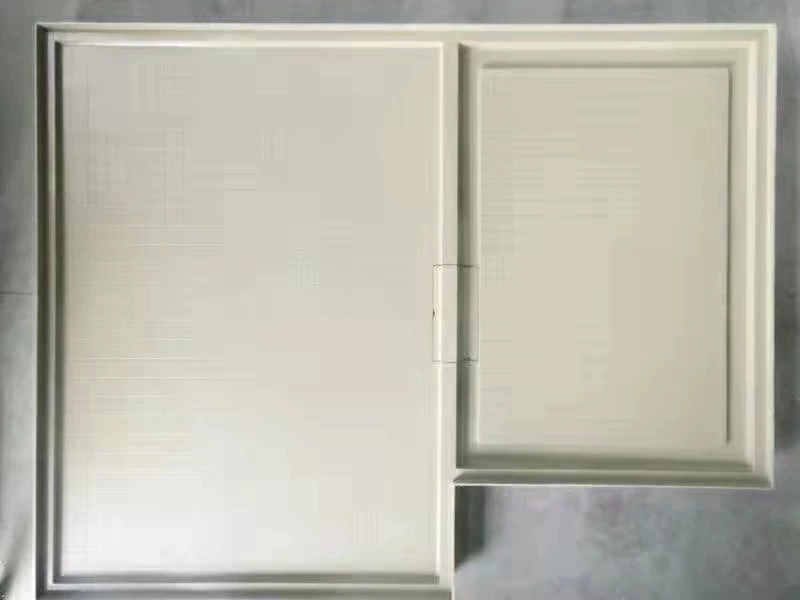
In contrast, SMC engineering samples exhibit a utilitarian, mass-produced industrial aesthetic. SMC molds can easily stamp out complex, multi-functional surface textures on a single sheet, such as tight anti-slip micro-grids or diamond-weave patterns.
Many SMC designs also incorporate faux-tile grid lines to help contractors mimic a traditional tiled floor layout without hiring expensive masonry labor. However, this thin composite structure creates a distinct plastic-like light reflection and a hollow acoustic echo underfoot, which is frequently rejected during premium hospitality design reviews.
3. Structural Rigidity: Deflection and Leakage Mitigation
In a high-traffic commercial hotel environment, a shower pan must withstand continuous, repetitive weight loads from guests of varying weights over thousands of cycles.
The SMC Deflection Risk: Because thin-walled SMC pans rely on open underside ribbing for support, the material inherently exhibits minor structural deflection or “give” under concentrated foot traffic. Over several years, this micro-movement creates a continuous shearing force that tears the structural silicone sealant at the wall-to-pan joints. This eventually allows moisture to breach the sub-floor, resulting in catastrophic multi-floor water damage.
The Artificial Stone Foundation: Because an Artificial Stone Shower Base is a monolithic block of high-density composite, its compressive strength is mathematically superior. It behaves like solid stone underfoot, yielding near-zero deflection. It establishes an unyielding, structurally stable foundation that anchors the entire shower enclosure and protects joint seals from cracking.
4. Job-Site Cross-Trade Damage and On-Site Repairability
Commercial construction sites involve aggressive cross-work where multiple trades operate in tight spaces simultaneously. Heavy pipe wrenches are dropped, and finished surfaces are routinely exposed to accidental scuffs.
If an SMC base is severely gouged or cracked by a fallen tool, its thin outer skin is breached, exposing the internal structural fiberglass layers. Because of its layered composite nature, this structural damage cannot be reliably repaired in the field. The contractor is forced to execute a costly, disruptive tear-out and replace the unit entirely, threatening the project’s turnover schedule.
Conversely, a premium Artificial Stone Shower Base offers a massive engineering advantage: it is 100% renewable and repairable on-site. Because its pigmentation and mineral matrix run solidly through the entire slab, regular maintenance crews can sand down and buff out deep scratches or stubborn construction stains using standard abrasive pads. The surface can be restored to its original factory condition without leaving a trace.
5. Architectural Synergy and Lifecycle Economics (TIC vs. TCO)
From an interior design standpoint, the shower foundation must harmonize with the dry zone of the commercial washroom.
The premium color control of an Artificial Stone Shower Base allows it to match the solid surface countertop of an adjacent commercial vanity unit flawlessly. When this heavy, stone-like foundation is paired directly alongside a bespoke wood cabinet layout, it creates a striking material contrast that elevates the perceived value of the guest suite.
When evaluating budgets, general contractors must analyze the Total Installed Cost (TIC) alongside the 10-year Total Cost of Ownership (TCO):
| Performance & Engineering Metric | Artificial Stone Shower Base | SMC (Sheet Molding Compound) |
| Material Weight & Acoustic Profile | Solid / Absorbs and mutes water noise | Lightweight / Echoes with hollow resonance |
| Field Customization Potential | Can be trimmed on-site to fit out-of-plumb walls | Standardized sizes only; cannot be modified |
| Job-Site Sub-Floor Preparation | Drops flat onto a level sub-floor; sets instantly | Often requires extensive manual mortar bedding |
| 10-Year Maintenance Budget | Near Zero (Infinite buffing & zero leak risks) | Moderate-High (Risk of seal failure &泛黄 yellowing) |
The Financial Verdict: SMC pans feature a highly attractive initial product invoice price and are light enough for a single worker to carry, making them suitable for budget motels, modular container housing, or mass-produced economy apartments. However, to eliminate the hollow feel, installers often spend extra field hours backing the pan with custom mortar beds, adding hidden labor costs.
For 4-star and 5-star hospitality developments where long-term asset protection is paramount, specifying a premium Artificial Stone Shower Base reduces field labor steps, eliminates the primary cause of guestroom water leaks, and lowers the property’s decadal maintenance budget to near zero.
FAQ: High-Volume Commercial Customization
Q: We are a modular housing developer. Our blueprint requires a custom notched L-shaped pan layout to clear a plumbing chase (similar to the SMC design in Figure 2). Can artificial stone accommodate this?
A: Absolutely. While mass-production lines like SMC struggle with custom modifications due to extreme steel mold costs, custom engineering is where our factory excels. Backed by 21 years of specialized global B2B contract manufacturing experience, HONDAO operates a highly agile production system backed by comprehensive OEM / customization capabilities. Whether your architectural plans require an integrated hidden drain system or precision factory cuts to fit complex architectural alcoves, our engineering team delivers exact submittal matching without delaying your production schedule.
If you are looking for a reliable Solid Surface Shower Wall Panel manufacturer, welcome to contact us for quotation, samples, or customized solutions. Hongdao Sanitary Technology Co., Ltd — Professional Shower Wall Panel Manufacturer Since 2005.
Stay connected with our manufacturing journey! Follow Hongdao Sanitary Ware on LinkedIn to watch our latest factory production videos, discover new mold designs, and explore our international hotel project success stories.