Ask a contractor what they hate most about shower pans, and the answer won’t surprise you: ordering the wrong size. Not because they measured wrong — because the catalog didn’t make it clear what was stock, what was special-order, and what was technically available but carried a 12-week lead time and a 200-unit minimum.
For anyone buying shower pans at scale, the size question isn’t just about inches on a tape measure. It’s about availability windows, SKU complexity, freight class, and whether three sizes can cover 90% of your projects or whether you need to stock a dozen.
Here’s rectangular shower pan sizing from a procurement and specification standpoint: what’s standard, what’s niche, what drives cost, and how to talk about it with suppliers without getting a vague answer.
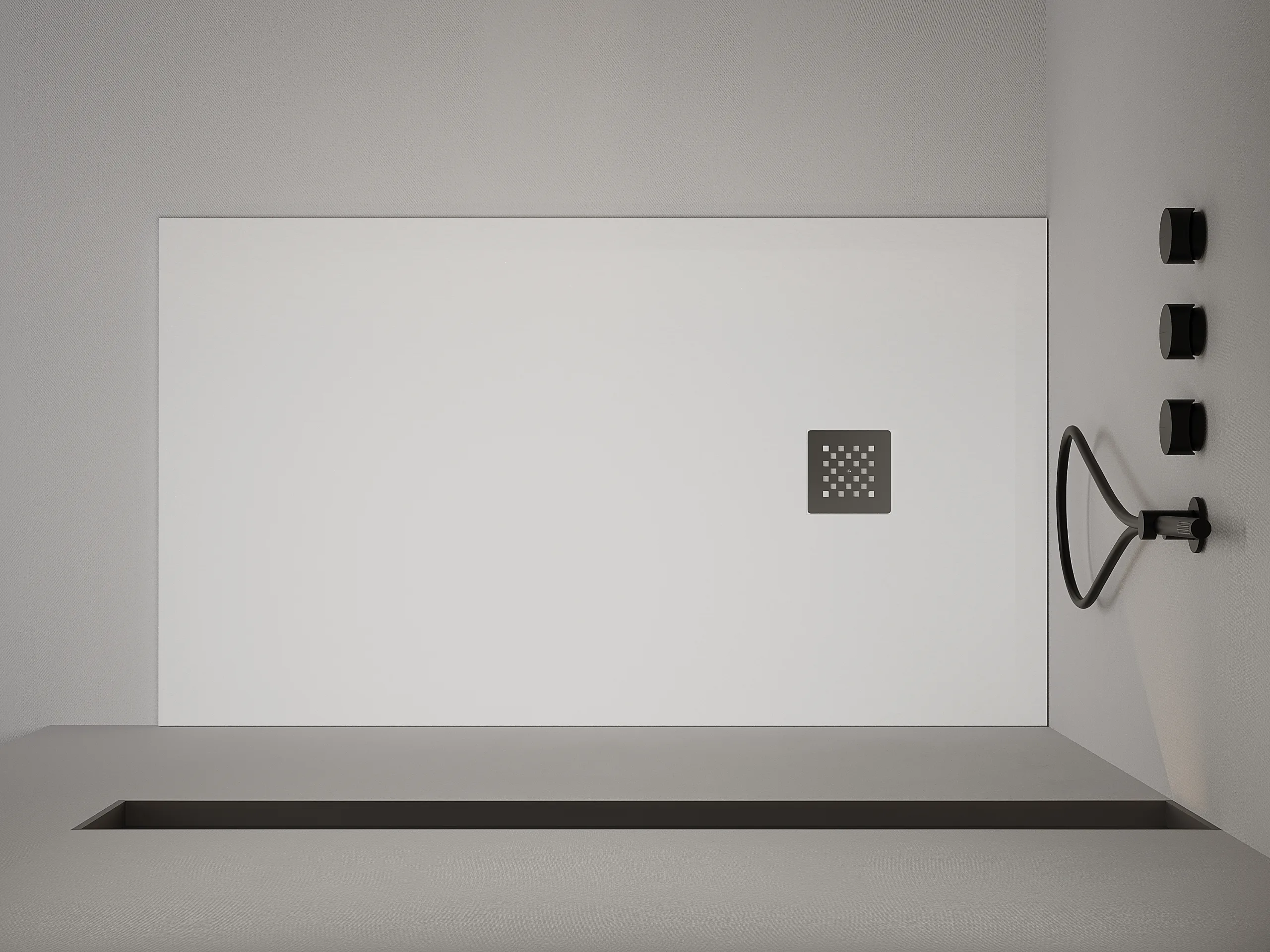
The Standard Rectangular Shower Pan Sizes Landscape
Here’s what’s actually sitting in warehouses — not what a brochure says is “available.”
Core Stock Sizes (Always Available)
These are the sizes every major manufacturer keeps in inventory. Distributors stock them. Lead times are measured in days, not months.
| Nominal Size (inches) | Rough Opening Needed | Primary Use |
|---|---|---|
| 30 × 60 | ~34 × 64 | Tub-to-shower conversion (matches standard tub footprint) |
| 32 × 60 | ~36 × 64 | Slightly wider tub conversion; most popular rectangular size |
| 36 × 48 | ~40 × 52 | Mid-size walk-in; common in condo/apartment builds |
| 36 × 60 | ~40 × 64 | Full-size walk-in; residential master baths, hotel guest rooms |
If you’re a distributor building out a SKU matrix or a contractor standardizing across a multi-unit project, these four sizes handle roughly 80% of rectangular installations. Every other size comes with caveats — longer lead times, fewer material options, or minimum order quantities.
Semi-Standard Sizes (Widely Available, Not Always Stocked)
These sizes are produced regularly by major manufacturers but may not ship same-week from every distributor:
| Size (inches) | Notes |
|---|---|
| 34 × 48 | Moderate availability; more common in acrylic than solid surface |
| 34 × 60 | Available from Kohler, MAAX, and a few mid-tier brands |
| 36 × 42 | Niche; mostly seen in compact renovations |
| 42 × 60 | Large alcove format; limited brand options |
| 48 × 60 | Largest commonly catalogued rectangle; luxury residential |
The 60-Inch Anchor
You’ll notice 60 inches dominates the rectangular category. This isn’t arbitrary. A standard bathtub is 60 inches long, and the wall cavity is already framed for it. When a hotel, apartment complex, or single-family developer converts tubs to showers — which is happening at scale right now — the 60-inch length means the existing framing stays. No reframing, no permit amendments, no plumbing relocation. The cost difference between “drop-in” and “custom-sized” can be thousands of dollars per unit.
If your business does any volume of tub-to-shower conversions, 30×60 and 32×60 are your bread and butter. Know their inventory levels cold.
Material Choices and Size Availability
Not every material is available in every size. This catches first-time buyers off guard.
| Material | Best Size Availability | Size Limitations | Typical B2B Use |
|---|---|---|---|
| Acrylic (PMMA) | Broadest range; 30×60, 32×60, 36×48, 36×60, 42×60, 48×60 all standard | Very large sizes (72″+) usually special order | Mid-range residential, hotel chains, multi-family |
| Fiberglass (SMC) | 30×60, 32×60, 36×60 most common | Fewer size options than acrylic; fewer semi-standard sizes | Budget multi-family, value-engineered projects |
| Solid Surface / Cast Resin | Core sizes (30×60, 32×60, 36×60) plus select large formats | 34″ widths less common; custom expensive | High-end hospitality, behavioral health, luxury residential |
| Composite (Tile-Ready) | Proprietary sizing per brand (Tile Redi, Schluter, Wedi) | Each brand has its own size grid — no cross-brand compatibility | Custom tile-finish projects |
| Cast Iron / Enameled Steel | Very limited; mostly 30×60, 32×60 | Heavy, expensive to ship; few manufacturers still producing | Historic renovations, ultra-premium |
The procurement takeaway: if you’re spec’ing across multiple projects with different budget tiers, don’t assume a 34×48 available in acrylic will also be available in solid surface. It often isn’t. Lock in material + size availability together, not sequentially.
Commercial and ADA Sizing: What the Regs Actually Require
For commercial projects — hotels, hospitals, senior living, multi-family — the size conversation shifts from “what fits” to “what’s compliant.”
ADA / ICC A117.1 Minimum Interior Dimensions
| Shower Type | Minimum Interior (inches) | Notes |
|---|---|---|
| Transfer-type | 36 × 36 | Requires grab bars, seat, and handheld shower |
| Roll-in (standard) | 30 × 60 | No seat; wheelchair rolls directly in |
| Roll-in (with seat) | 36 × 60 | Seat permanently mounted on side wall |
Threshold Requirements
| Threshold Height (max) | Applies To |
|---|---|
| ½ inch | Transfer-type showers |
| ¼ inch or flush | Roll-in / barrier-free showers |
Threshold Requirements
| Threshold Height (max) | Applies To |
|---|---|
| ½ inch | Transfer-type showers |
| ¼ inch or flush | Roll-in / barrier-free showers |
These numbers aren’t optional if the project receives federal funding or needs to meet universal access standards. The liability sits with whoever specified the pan.
Sizes That Show Up in Hotel FF&E Specifications
Hotel procurement teams tend to cluster around a few sizes for operational simplicity:
- 30 × 60 — Standard guest room, tub-replacement
- 32 × 60 — Slightly more spacious guest room
- 36 × 60 — Accessible room, suite
- 60 × 36 roll-in — ADA-compliant accessible room
- 72 × 36 — Luxury suite, full accessible
If you’re bidding on hospitality FF&E packages, these five sizes should be in your quote template before the RFP lands. The 72×36 is the one most suppliers can’t price quickly — having that number ready signals you’ve done hospitality work before.
Custom Sizes: When, How Much, and How Many
When Custom Makes Sense
Custom sizing isn’t just for luxury one-offs. It also comes up when:
- A project has an irregular footprint (historic building, converted space)
- The design calls for a linear drain that doesn’t work with standard drain-hole positions
- A developer wants a signature size across hundreds of identical units (the “semi-custom at scale” model)
- Zero-threshold accessibility requires a specific pan depth that doesn’t exist off the shelf
What Custom Actually Costs
Ballpark figures based on current manufacturer pricing:
| Type | Typical Cost Multiplier vs. Stock | Lead Time |
|---|---|---|
| Modified standard (e.g., stock mold with custom drain location) | 1.3× – 1.8× | 4–6 weeks |
| New mold (low volume) | 2× – 4× per unit | 8–12 weeks |
| Fully bespoke (cast/formed) | 3× – 5× per unit | 10–16 weeks |
Rectangular Shower Pan Sizes Minimum Order Quantities
This is the number that determines whether custom is viable:
- Acrylic pans: Most factories require 200–500 units for a new mold. Some will amortize tooling costs into the per-unit price above 100 units.
- Solid surface: Lower MOQ; some shops will do 50–100 units at a premium.
- Composite/tile-ready: Brand-dependent. Tile Redi, for example, can batch custom sizes across project phases, meaning your total order can span multiple buildings at different completion dates and still count toward the volume minimum.
If you need fewer than 50 units in a custom size, the math almost never works. You’re better off either adapting the design to a stock size or going the site-built mortar pan route.
Evaluating a Supplier: Size-Related Questions That Matter
When you’re talking to manufacturers or distributors, skip the brochure questions. Ask these:
- “What sizes do you actually stock, and what’s the lead time on the rest?” The catalog might list 18 sizes. The warehouse might carry six. Know which is which.
- “What’s your actual rough-in tolerance?” A pan sold as 60 inches might measure anywhere from 59½ to 60⅜ depending on the mold and material. That gap matters when you’re framing a dozen units to the same spec.
- “Do your sizes match across materials?” Some manufacturers use different molds for acrylic and solid surface lines. A 36×60 in acrylic might not match a 36×60 in solid surface from the same brand.
- “What drain positions are available in each size?” 36×60 with center drain might be stocked. Same pan with left or right drain? Four-week special order. Confirm drain placement availability before locking the size.
- “What’s your commercial warranty by size?” Some manufacturers shorten warranty terms for larger pans or specific materials. A lifetime residential warranty might shrink to two years commercial on the same product.
FAQ
Q: Is 30×60 or 32×60 more common for tub-to-shower conversions?
32×60 is now the most common, having overtaken 30×60 in the last few years. The extra two inches of width make a noticeable difference in shower comfort without requiring structural changes — most tub alcoves can accommodate either. From a stocking standpoint, many distributors now treat 32×60 as the default and 30×60 as the budget alternative.
Q: Do European hotels use the same rectangular sizes as North America?
Not exactly. European shower trays tend toward metric dimensions — 800×1200 mm, 900×1400 mm, 1000×1800 mm — and are often shallower (25–40 mm vs. the 2–4 inch thresholds common in North America). If you’re sourcing for a transatlantic project, don’t convert inches to millimeters and assume a match. Stock separate SKU sets.
Q: Should I stock left-drain, right-drain, or center-drain pans?
Center drain is the safest default — it works for the broadest range of rough-in configurations. If you’re a distributor with the inventory bandwidth for three drain positions, stock center-heavy (60%), left (20%), right (20%). If you can only carry one SKU per size, make it center drain. It won’t fit every job, but it fits the most jobs.
Q: Are there standard sizes that work for both residential and commercial?
30×60, 32×60, and 36×60 cross over reliably. They meet ADA minimums (with the right threshold) and work in standard residential alcoves. If you’re buying for mixed-use projects, these three sizes simplify procurement without sacrificing compliance.
Rectangular shower pan sizing looks straightforward on a spec sheet. In practice, the difference between a stock 32×60 that ships tomorrow and a “catalog” 34×48 that needs six weeks and a minimum order is the difference between a project that stays on schedule and one that doesn’t.
The buyers who do this well don’t memorize every size. They know what’s always available, what’s conditionally available, and what’s essentially custom — and they plan their projects around the first category, dip into the second sparingly, and treat the third as a last resort.
If you’re building out a product line, stocking a warehouse, or speccing across multiple buildings, nail down your standard rectangle sizes first. Everything else — materials, finishes, drain locations — is secondary to knowing what will actually show up on time.