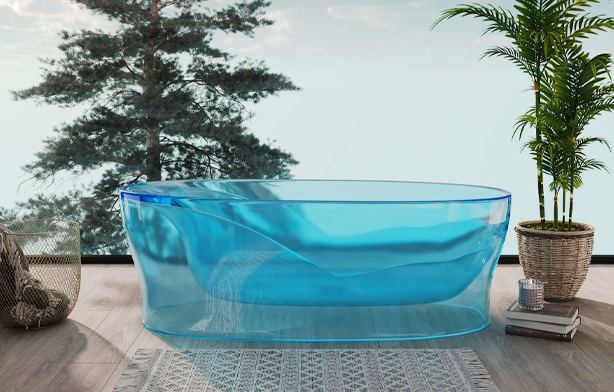
Benefits of Choosing a Resin Bathtub
You’ve likely stepped into a luxury hotel bathroom and admired a sculptural tub that looks carved from a single block of matte stone. Standard acrylic fixtures are highly affordable, but they typically feel distinctly plastic and hollow to the touch. A resin bathtub, however, delivers the heavy, grounded presence of natural rock without the impossible structural weight of pure marble.
Interior design experts frequently highlight these fixtures as the focal point of modern minimalist bathroom design trends, which comes down to how they are crafted. Known as a “solid surface material,” stone resin acts a bit like baking dough: crushed natural minerals are mixed with a high-quality liquid binder, poured into a mold, and hardened. Although this specialized manufacturing process noticeably drives up the initial price tag, the result is a non-porous, visually seamless centerpiece.
Have you ever wondered why your water goes cold after just ten minutes? Traditional tubs let warmth escape rapidly, but the dense walls of a resin bath trap heat like an insulated thermos. Ultimately, choosing this premium material transforms a hurried daily routine into a deeply restorative, spa-like soak at home.
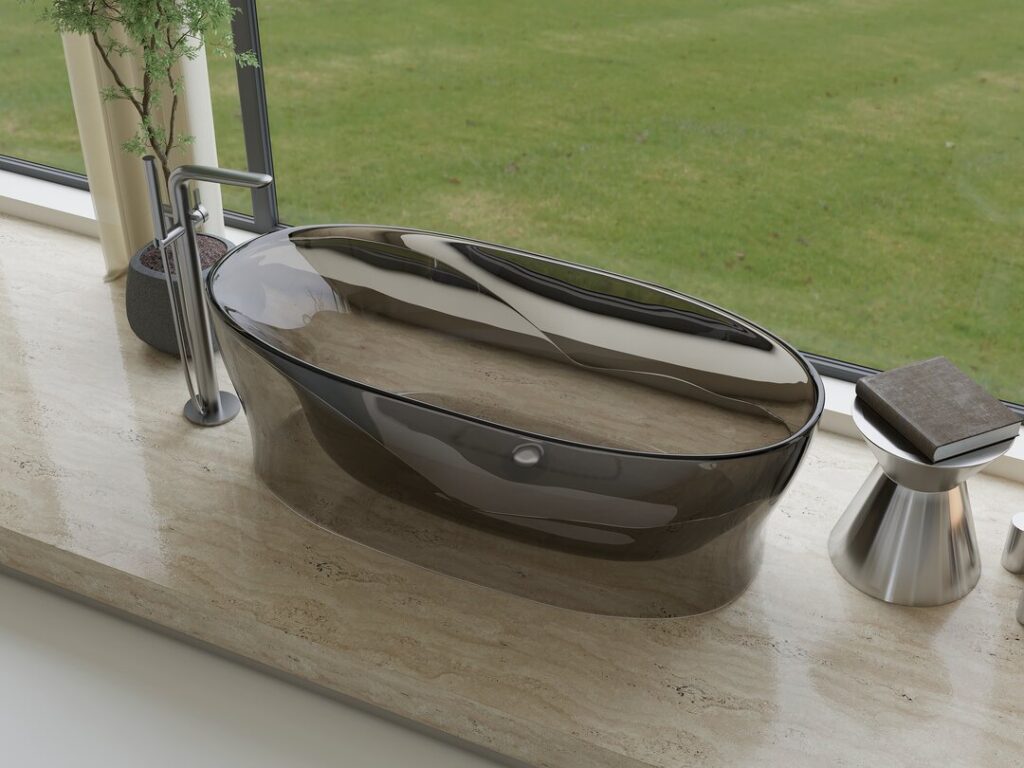
From Mineral Dust to Modern Art: What Exactly is a Resin Bathtub?
Stepping into a standard acrylic bathtub often reveals a slight flex under your weight. A resin tub, however, offers a completely grounded experience because of how it is built. Think of its creation like mixing cookie dough. Manufacturers blend crushed mineral dust (the flour) with a specialized liquid binder (the wet ingredients) to create a dense, durable composite material.
Unlike traditional hollow fixtures that rely on a thin topcoat, this stone mixture is solid all the way through. When comparing polyester resin vs acrylic materials, the secret to this heavy-duty strength is a chemical reaction called cross-linking. As the mixture cures, the molecules permanently lock together into a rigid grid, resulting in a solid surface soaking tub. If you happen to scratch it, you simply reveal more of the exact same stone underneath.
Pouring this liquid stone into a single mold—the casting process—allows designers to craft striking, seamless shapes without awkward joints or hidden seams. Because the finished product hardens into an incredibly dense block, it does much more than just elevate your bathroom’s aesthetic. It naturally captures and holds energy, helping you ditch the reheating habit and keeping your bath water hotter for longer.
Ditch the Reheating Habit: How Resin Composite Keeps Your Bath Water Hotter for Longer
Constantly running the hot tap to “top off” a cooling tub wastes both water and energy. A resin bathtub solves this through a principle called thermal mass. Because the tub’s walls are incredibly dense, they act like a thermos. The material absorbs your water’s heat and slowly radiates it back.
When weighing stone resin vs acrylic pros and cons, the heat retention of composite materials is a major deciding factor. Consider how long common materials keep water hot before noticeably cooling:
- Acrylic: Loses heat quickly (15–20 minutes) since thin, hollow walls offer minimal insulation.
- Cast Iron: Steals heat initially to warm its cold metal frame, but holds warmth for 30–40 minutes.
- Resin: Provides natural, thick insulation, effortlessly keeping water steaming for 45–60 minutes.
This extended soaking time happens because the solid walls physically block heat escape, guaranteeing an uninterrupted, spa-like soak without draining your water heater. Fortunately, the exact same dense structure that traps this heat also makes the tub incredibly tough, hinting at why these fixtures easily outlast traditional options.
Built to Last a Lifetime: Why Resin Tubs Are More Durable Than Standard Acrylic
Imagine dropping a heavy glass bottle into your bathtub. In standard acrylic, that sharp impact often causes a permanent crack. However, when homeowners ask, “are stone composite tubs durable?” the answer lies in their dense construction. A dropped bottle merely results in a dull thud, ensuring a superior long-term return on your investment by resisting everyday chips.
Beyond physical damage, ordinary tubs frequently fall victim to cosmetic discoloration. Because resin creates a completely non-porous surface, liquids simply cannot sink in. Vibrant bath bombs, dark hair dyes, and oily bath products wipe away easily without leaving behind the stubborn stains or yellowing typical of aging plastics.
Even if minor wear occurs over time, this material possesses a unique advantage: it is fully renewable. If you ever wonder how to repair scratches in man-made stone, the solution is surprisingly DIY-friendly.
By utilizing a basic buffing kit for solid surface materials, you can gently sand away blemishes in minutes. Because the tub’s color runs entirely through the material, you never risk wearing down a superficial top coat. Your fixture will look pristine and brand new for decades. Yet, the exact density providing this incredible resilience also adds significant mass. Before purchasing, you must apply the “Piano Rule” to your floor to successfully navigate the weight and installation of a freestanding tub.
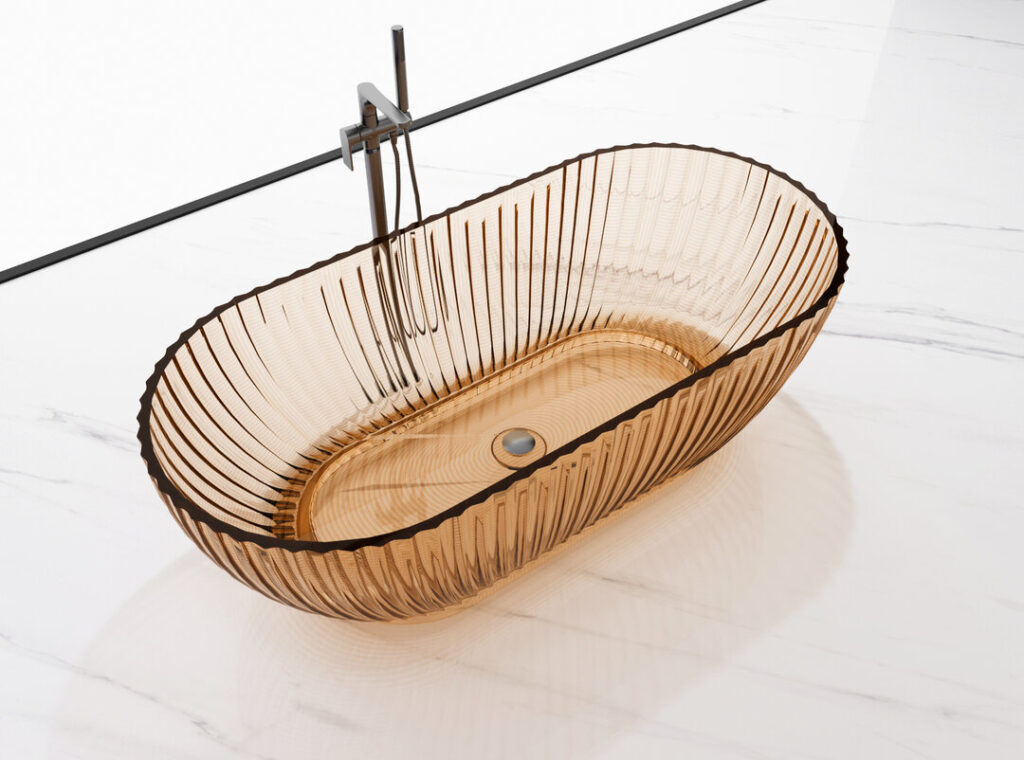
The ‘Piano Rule’ for Your Floor: Navigating the Weight and Installation of a Freestanding Tub
While resin guarantees long-lasting beauty, it also means these fixtures are remarkably heavy. An empty stone composite tub often exceeds 300 pounds. Once you factor in 60 gallons of water and an adult bather, that small footprint suddenly supports over 900 pounds of dynamic weight. Here, the “Piano Rule” applies: if your floor cannot safely hold a grand piano, you must thoroughly evaluate weight requirements for freestanding tubs before buying.
Moving this massive centerpiece requires logistical planning well before delivery day. Consider this your essential freestanding pedestal tub installation guide by following a simple pre-installation checklist:
- Measure the path: Verify that doorways, staircases, and tight corners can accommodate the tub’s exact dimensions without damaging walls.
- Assess the framing: Consult a structural engineer to inspect your joists; standard residential framing frequently requires floor reinforcement for heavy soaking tubs.
- Recruit muscle: Secure at least three or four capable individuals to safely maneuver the bulky unit into its final position.
Taking these structural precautions ensures your investment remains safely anchored without sagging floors. Once the heavy lifting finally concludes, the hardest work is permanently behind you, allowing you to immediately enjoy the material’s most convenient feature: simple cleaning.
Minimalist Maintenance: Why a Non-Porous Surface Means Less Scrubbing and No Bacteria
Scrubbing bathroom mildew is a universal weekend headache. Thankfully, the solid manufacturing process of a resin tub provides incredible non-porous bathroom fixture benefits. Because there are no microscopic holes for moisture to hide in, mold and grime simply cannot take root. You naturally gain the antibacterial properties of synthetic stone without needing to rely on lung-burning bleach sprays to keep your bathing environment hygienic and safe.
Protecting this investment requires identifying chemical sensitivities and separating safe daily cleaners from “danger-zone” products. While older fixtures might require harsh chemicals to lift stubborn stains, applying abrasive powders or highly acidic solutions to resin will actually dull its surface over time. Your danger zone includes window cleaners, concentrated bleach, and stiff scouring pads. Instead, warm water mixed with a gentle, everyday dish liquid easily breaks down bath oils and soaps.
Mastering the five-minute routine for cleaning matte finish bathtubs ensures your luxurious soaking spot looks brand new for decades. Just wipe the basin with a soft microfiber cloth and mild soap, then rinse thoroughly. Because the color runs consistently through the entire material, minor scratches are easily buffed away. Consequently, you spend less time scrubbing and more time relaxing.
Choosing Your Centerpiece: A Final Checklist for Your Resin Tub Investment
You now understand why a resin bathtub is a smart, long-term investment. By weighing stone resin vs acrylic pros and cons, you clearly see how resin offers cast iron’s heat retention without the impossible weight. As you finalize your eco-friendly bathroom remodeling materials, use this Final Decision Matrix:
- Heat: Resin (High) | Acrylic (Low) | Cast Iron (High)
- Weight: Resin (Medium) | Acrylic (Light) | Cast Iron (Heavy)
- Price: Resin ($$$) | Acrylic ($) | Cast Iron ($$$$)
- Repairs: Resin (Simple sanding) | Acrylic (Difficult) | Cast Iron (Pro only)
- Vibe: Resin (Matte stone) | Acrylic (Plastic) | Cast Iron (Classic)
Your renovation doesn’t require compromising between practicality and beauty. By evaluating your structural requirements and selecting a high-quality solid surface, you secure a reliable, spa-like sanctuary built right into your home.
If you’re sourcing for a project, hospitality build, or resale, choosing the right supplier matters as much as choosing the right material. Hondao is a factory that provides high-quality Resin Bathtub wholesale and offers one-stop customization—supporting tailored sizes, shapes, finishes, and other specs to match your brand or project needs.