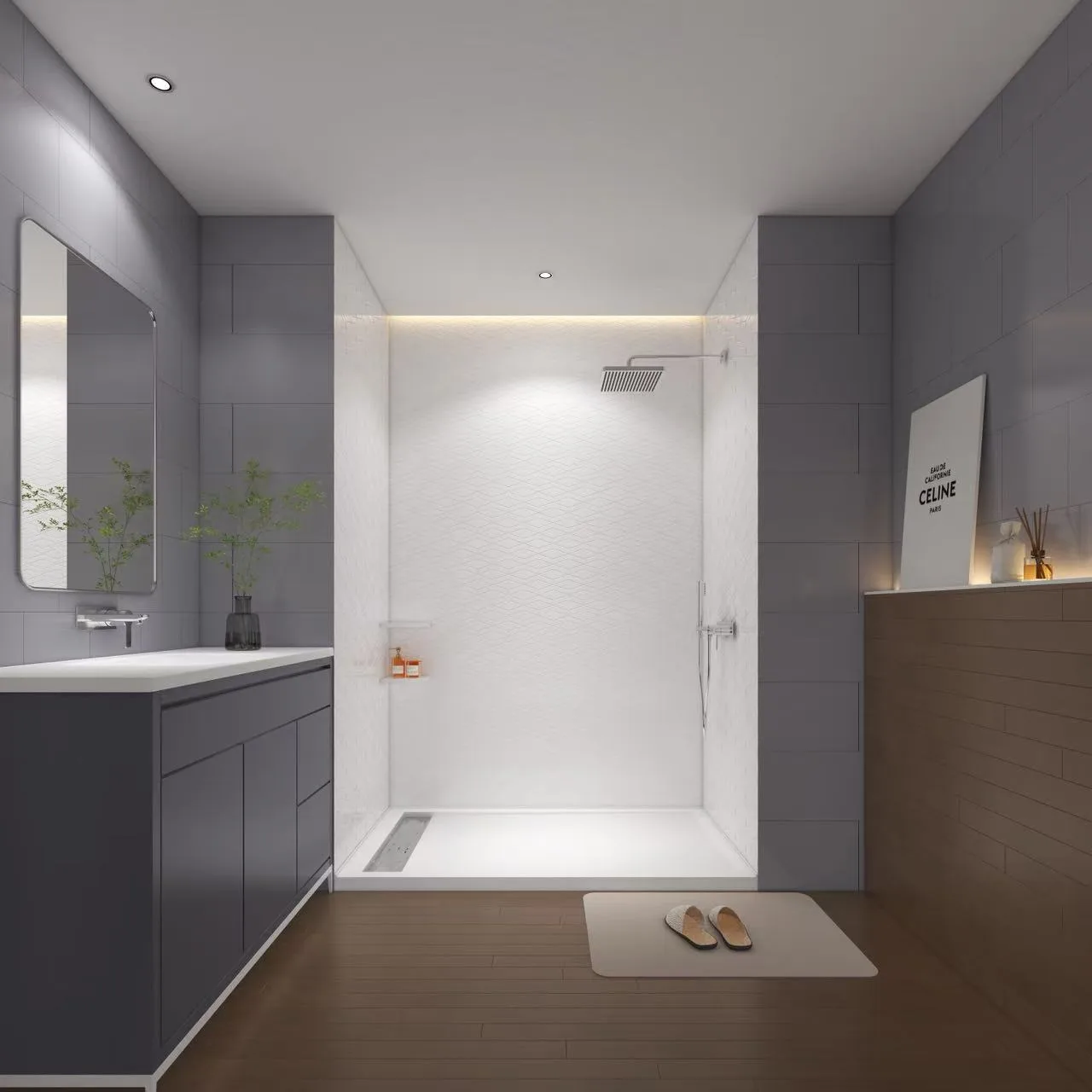
Senior housing projects have a different success metric than most bathroom renovations: reducing incidents, reducing maintenance burden, and reducing callbacks. When you’re specifying a low-threshold solid surface shower base (North America: shower base or shower pan; Europe/UK: shower tray), the best results come from aligning terminology early and confirming the right details in the RFQ—before production, shipping, and installation begin.
If you’re sourcing for a project, this guide gives you a practical checklist for procurement, contractors, and specifiers—plus a copy/paste RFQ template you can send to your supplier.
If you want a fast quote, send your size + drain/waste position + quantity + target delivery date here:
Request a Project Quote (RFQ)
Note: Accessibility and safety requirements vary by country, state, and project type. This article is general guidance, not legal advice. Always confirm local codes and project requirements with qualified professionals.
1) “Low Threshold” vs “Barrier-Free” vs “Curbless” (Align Terms Early)
These terms are often mixed, but they are not the same:
- Low-threshold: a reduced entry lip designed to make step-in easier and reduce trip risk.
- Barrier-free / curbless: typically implies a flush transition (often with more demanding waterproofing and floor construction).
- Low profile (tray) (EU/UK term): often refers to a thinner tray profile, but still not automatically “barrier-free.”
Before you request pricing, align on what “low threshold” means for your project and region. For US projects, you may need to reference ADA-related guidance depending on the facility type and scope. Start here for the official US resource hub:
External reference: ADA.gov
External reference (standards overview): 2010 ADA Standards for Accessible Design (resource page)
For UK projects, requirements may relate to Approved Document guidance.
External reference: UK Approved Document M (gov.uk publications page)
2) Where Low-Threshold Bases/Trays Make Sense in Senior Housing
Low-threshold solutions are commonly used in:
- Assisted living and independent living units (safer entry, easier daily use)
- Senior apartments and renovation projects (reduce disruption vs full wet-room rebuild)
- Hotel-style senior suites (maintenance-friendly finishes, fewer grout lines if paired with wall panels)
From a project perspective, the goal is not only “easy access”—it’s also easy maintenance, predictable installation, and fewer service calls.
3) The RFQ Spec Checklist (Copy This for Procurement)
Use this checklist to avoid re-quotes and rework. When you request a quote, provide the minimum viable information plus any project-specific constraints.
Project Spec Checklist for Low-Threshold Shower Bases/Trays
| Item | What to specify in RFQ | Why it matters | Evidence to request |
|---|---|---|---|
| Overall size (L×W) | Final required size + rough opening (inch/mm) | Fit and site conditions | CAD drawing + size confirmation |
| Threshold/entry type | “Low threshold” target + entry side | Safety, usability, waterproofing | Drawing showing entry/threshold |
| Drain (NA) / Waste (EU) position | Left/right/center + dimensions from walls | Plumbing alignment, avoid rework | Drain/waste position drawing |
| Outlet details | Outlet type/size if required by project | Compatibility with site plumbing | Spec sheet or drawing note |
| Slope/drainage intent | Confirm drainage expectation + usage scenario | Helps prevent pooling complaints | Installation notes + acceptance approach |
| Surface finish | Matte/textured preference + cleaning constraints | Slip risk vs cleanability | Samples, finish options sheet |
| Color | White/other + matching expectation | Consistency across units | Color sample approval |
| Quantity & phasing | Total qty + phased deliveries | Production planning | Lead time plan |
| Documents | Need CAD/spec/installation guide | Contractor coordination | PDF pack + version control |
| Packaging | Pallet/carton requirements + container shipping | Reduces damage and claims | Packaging photos/spec |
If you’re also sourcing wall systems to reduce grout maintenance, link your procurement team to your wall solution set:
Solid Surface Shower Base/Tray Options
Downloads: Spec Sheets & CAD
4) Drain/Waste Position Options (NA vs EU) — What to Provide
Miscommunication about drain/waste position is one of the most common causes of “quote delays” and “wrong-fit deliveries.”
In your RFQ, provide:
- A simple sketch with overall dimensions
- The drain/waste position with two reference dimensions (e.g., from left wall and back wall)
- Photos of the current plumbing (for renovations)
- Any constraints: slab vs subfloor, access panel limits, etc.
If you’re unsure, send photos and measurements first—your supplier should help confirm feasibility before production:
Send Measurements for Confirmation (RFQ)
5) Installation Considerations That Affect Quoting (and Callbacks)
For senior housing, callbacks often come from three areas: movement/noise, water containment, and maintenance complaints.
Key items to confirm with contractors and your supplier:
- Subfloor type: concrete slab vs wood subfloor affects leveling approach and installation method.
- Waterproofing responsibility: define the boundary between base/tray installation and wall waterproofing system (tile or panels).
- Interface sealing: clarify sealing method and trim strategy at corners and edges, especially for renovation retrofits.
- Slope expectations: “low threshold” does not mean “flat.” Drainage and slope must be appropriate for wet use.
If your site teams need standardized docs for contractors, keep a single download hub:
Installation Guides & Project Files
6) Samples, Mockups, and Sign-Off (How Projects Avoid Rework)
For multi-unit projects, a simple approval workflow reduces risk:
- Surface sample approval (finish + color)
- Document review (CAD + spec sheet + installation guide)
- One mockup unit (or a controlled test installation)
- Sign-off on fit, finish, and drainage behavior
- Proceed with bulk production
This is especially helpful when balancing slip risk and cleanability for facility teams.
7) What to Ask Your Supplier For (Docs + QC + Packaging)
A project-ready supplier should be able to provide (as applicable):
- CAD drawings and updated revisions
- Spec sheets and installation guides
- Defined QC checkpoints (incoming/in-process/final)
- Packaging method for pallet and container shipping
- Spare parts or recommended accessories policy (if relevant)
You can link these pages in your vendor approval workflow:
Quality Control Overview
Packaging & Shipping
8) Copy/Paste RFQ Template (Low-Threshold Senior Housing)
Use this template to speed up quoting and reduce back-and-forth:
Subject: RFQ — Low-Threshold Solid Surface Shower Bases/Trays (Senior Housing Project)
Hello,
We are sourcing low-threshold solid surface shower bases/trays for a senior housing project. Please quote based on the details below and confirm feasibility with CAD.
- Project location (Country/City):
- Project type: (assisted living / independent living / apartment renovation / other)
- Required size (L×W): (inch/mm)
- Rough opening size: (inch/mm)
- Drain (NA) / Waste (EU) position: (left/right/center/offset) + dimensions from walls
- Quantity (total) + delivery schedule (phased):
- Target delivery date:
- Surface finish preference: (matte/textured) + cleaning constraints (if any):
- Color requirement:
- Documents required: (CAD / spec sheet / installation guide)
- Sample required: (yes/no)
- Incoterms (if known): (EXW/FOB/DDP/other)
Please include: MOQ, lead time, packaging method (pallet/carton), and any notes for installation.
Thank you.
To submit this as a form instead, use:
RFQ / Inquiry Form
Next Step: Send Size + Drain/Waste + Quantity for a Quote
Low-threshold solutions can reduce trip risk and improve daily usability in senior housing—but only when the RFQ clearly defines the entry type, drain/waste position, finish, and documentation requirements.
Send your project requirements and we’ll respond with recommended options and the file pack (spec/CAD) needed for review:
Request a Project Quote