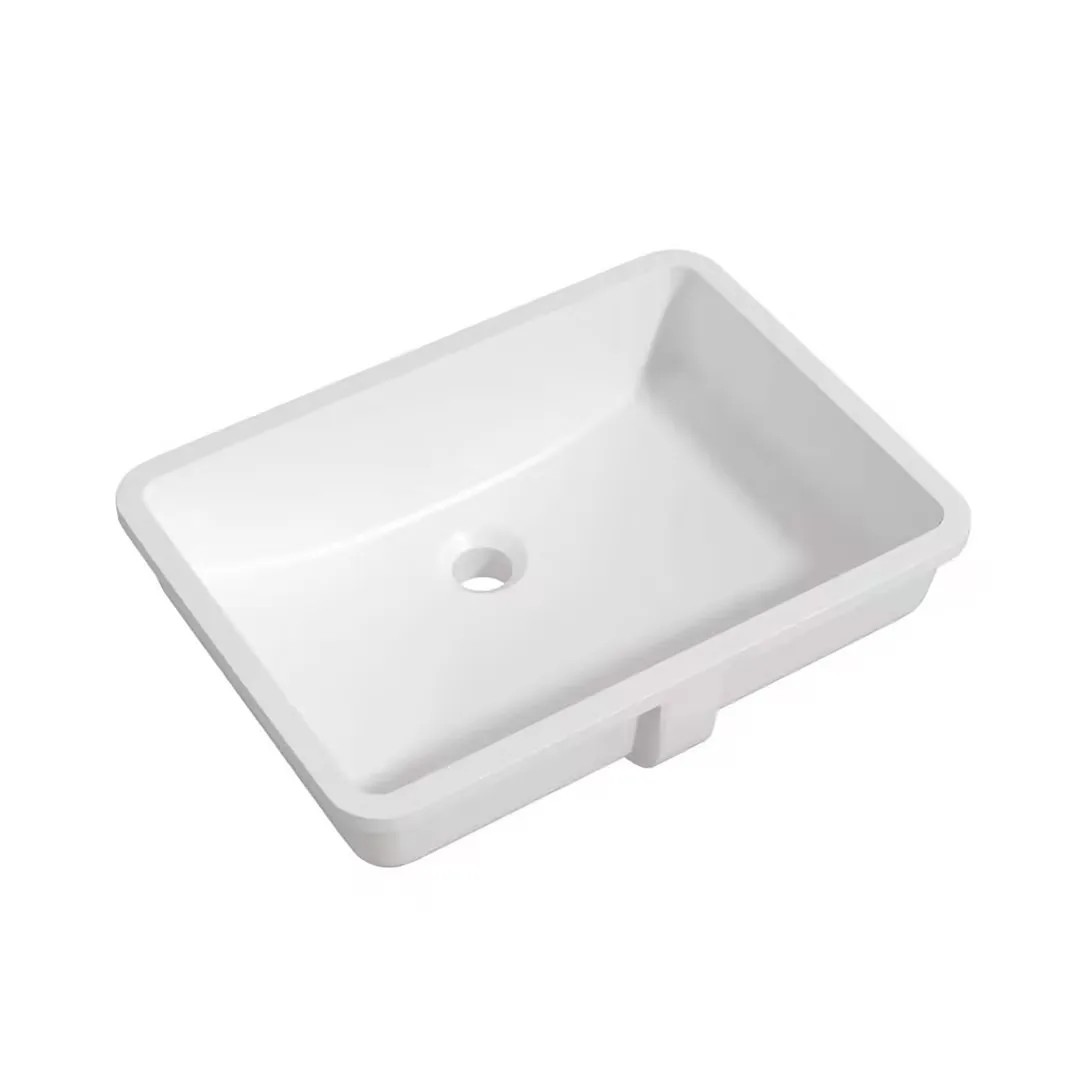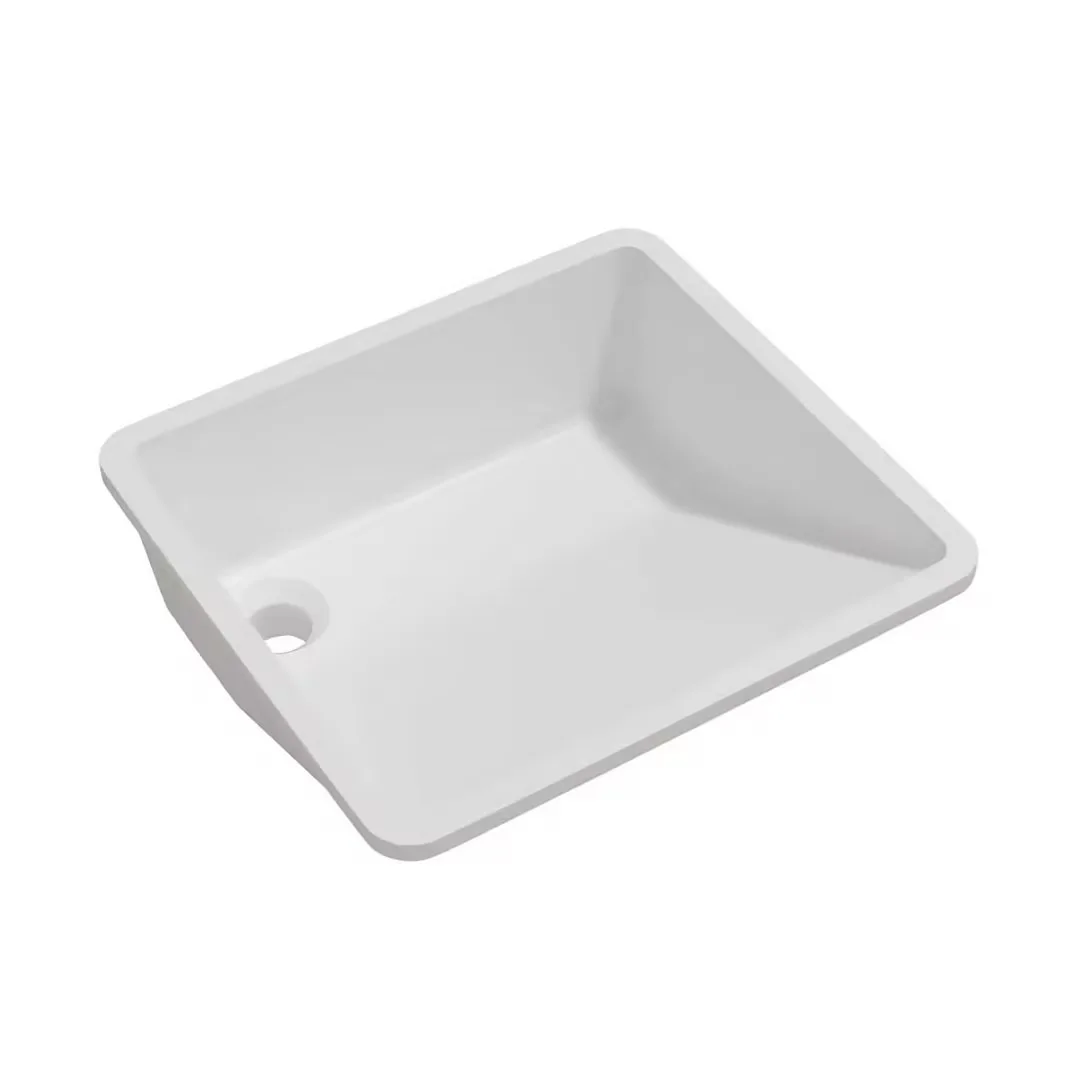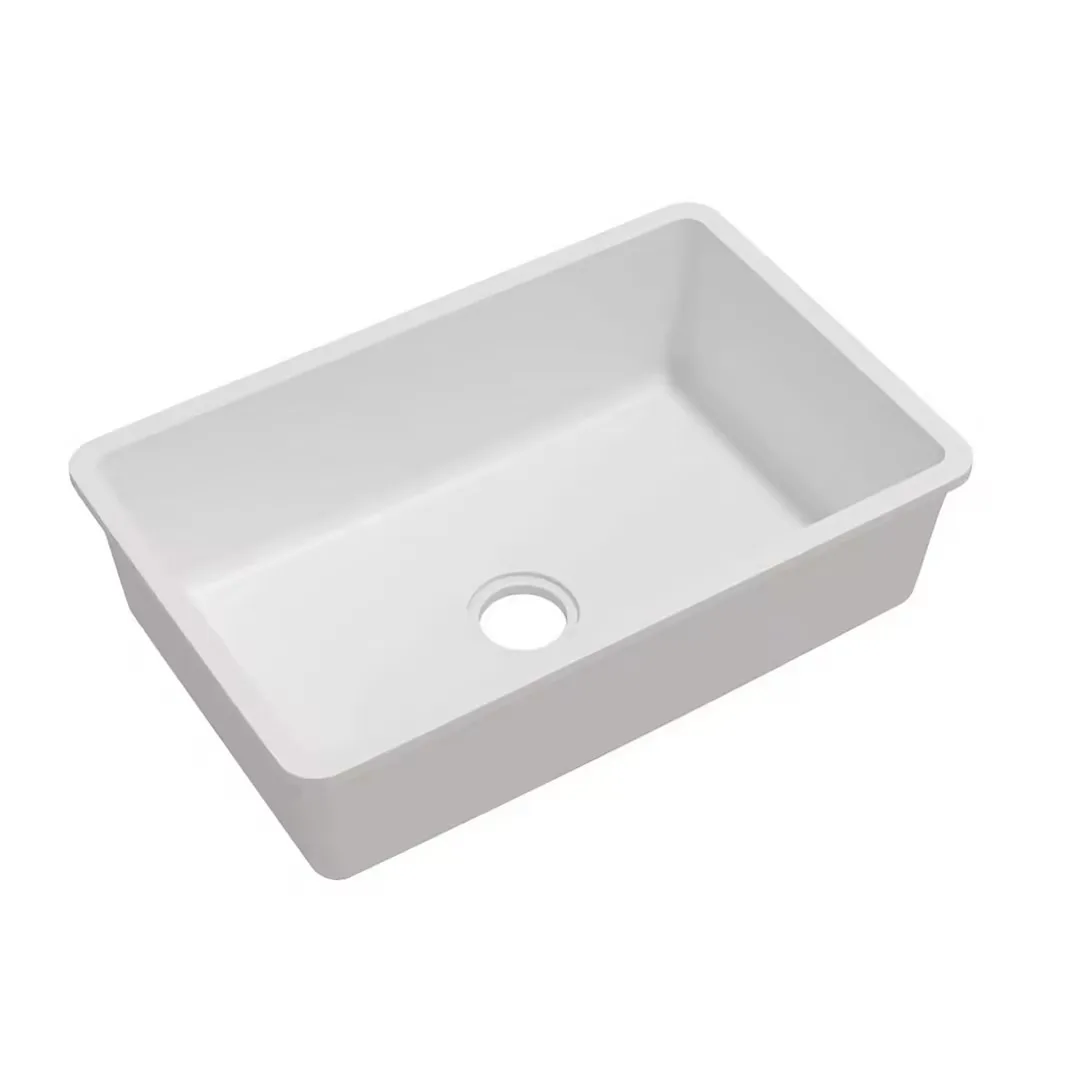
Why solid composite stone shower pan base failures happen
Shower pan failures rarely start visibly. Water seeps through micro-cracks, works into subfloors and adjacent spaces, and by the time someone notices a musty smell or soft spot on the bathroom floor, the damage is already done. Wood rots. Mold develops inside walls. Structural remediation follows.
In a hotel or multi-family project, that means taking rooms offline, disrupting guests, and absorbing repair costs that typically run 10 to 20 times the original fixture price.
Most failures aren’t material failures — they’re junction failures. The waterproof barrier breaks down at seams, around the drain flange, or along perimeter edges. The root cause is usually core material integrity, dimensional accuracy, or inconsistent curing. Standard AQL-level statistical sampling doesn’t catch these.
HONDAO inspects 100% of production at every critical manufacturing stage, not a random 2% sample. Here’s what that looks like in practice.
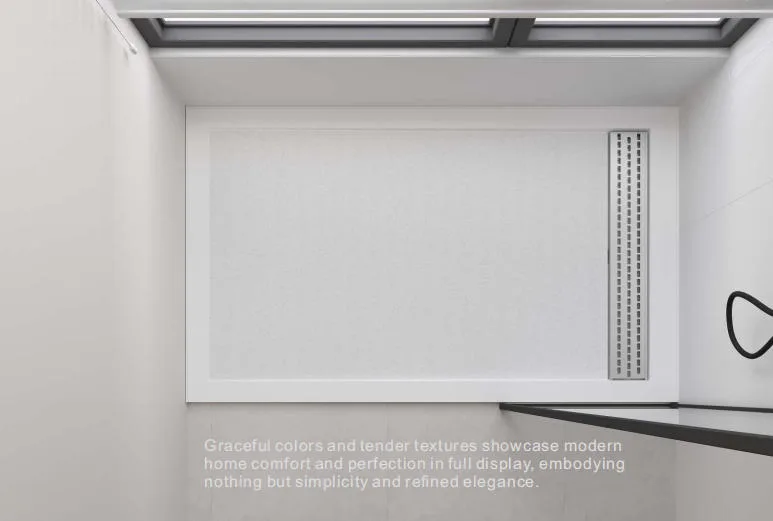
Material composition
The pan starts with a proprietary blend of premium dolomite aggregate (or natural mineral filler) combined with flexible high-performance resin — the same material approach used in high-traffic commercial washroom surfaces.
Many low-cost composite pans use cheap resin blends with high void content, or apply a surface coating over a low-density core. The surface looks uniform at delivery, but after 6 to 12 months of daily cleaning chemicals and thermal cycling, the coating delaminates and exposes the porous underlayer underneath.
HONDAO casts the entire pan as a single homogeneous piece. No coating, no substrate adhesion layer. The solid composite stone structure is uniform from the top surface through the full thickness. Water absorption comes in below 0.5%, well under the ≤1% threshold in CSA B45.8/IAPMO Z403 for composite stone plumbing fixtures.
Low-pressure thermoforming vs. vacuum forming
Acrylic and SMC pans are vacuum-formed: the material stretches over a mold, creating thickness variations that concentrate stress at drain locations and edges. Under a 150 kg standing load, those thin spots flex. Over thousands of cycles, micro-cracks develop at the drain barrel interface.
HONDAO’s low-pressure thermoforming process produces uniform material thickness across the entire floor surface. The pan behaves as a monolithic slab under load, distributing weight evenly to the subfloor rather than flexing at stress points.
Quality control: two tests every unit must pass
Static load test — 300 kg minimum
Every pan is placed on a calibrated testing jig with simulated floor conditions. A concentrated static load of 300 kg (661 lbs) is applied via steel loading plate at the most unfavorable location, typically the center of the largest unsupported span.
Any measurable deflection exceeding 1.5 mm means automatic rejection and diversion to material reclamation. Commercial-grade product consistently passes at 350 kg+. Load capacity data is printed on every compliance label.
24-hour static flood with dye penetrant
Each pan is blocked at the drain opening and filled with water to threshold level for 24 hours. A fluorescent dye penetrant is added to the water.
After the soak period, QC inspectors scan the entire pan — top surface, underside, perimeter edges, and drain interface — under UV light. Any sign of penetrant migration indicates microscopic porosity. The unit fails immediately.
Most solid composite stone shower pan base manufacturers skip this step or run it on one sample per shift. At HONDAO, full-batch flood testing is mandatory for every production round.
Surface finish verification
Gloss uniformity is measured with a calibrated gloss meter at 5 designated points per pan. Target tolerance is less than 5% variation across the surface. Inconsistent gloss often indicates uneven resin distribution during casting, which is a precursor to long-term staining and chemical attack.
Batch consistency for large projects
When you’re specifying the same solid composite stone shower pan base across 500 guest rooms, batch-to-batch consistency matters. HONDAO’s color-managed production process handles this through:
- Computer-controlled raw material dosing at ±0.5% tolerance per batch
- CNC-machined master molds with digital 3D coordinate capture
- First-article dimensional verification via coordinate measuring machine (CMM) at ±0.2 mm accuracy
- Production mold re-verification every 250 cycles to prevent drift
The 500th pan will match the approved sample in material properties, surface texture, and dimensional accuracy.
Solid composite stone shower pan base custom options
Standard sizes: 36×36″, 38×38″, 48×30″, 48×36″, 60×30″, 60×36″.
Custom options include drain location (center, offset, linear trench), thickness profiles for accessibility thresholds, and dimensions outside the standard range. No up-front tooling fee for moderate batch modifications.
👉 Get a free engineering quotation for your hotel or commercial project: Send your dimension requirements, drain location preferences, and target MOQ to our OEM desk. Sample ready in 20 days.
HONDAO Sanitary Ware Manufacturing — Engineered for Commercial Cycles, Inspected for Zero Failure.